
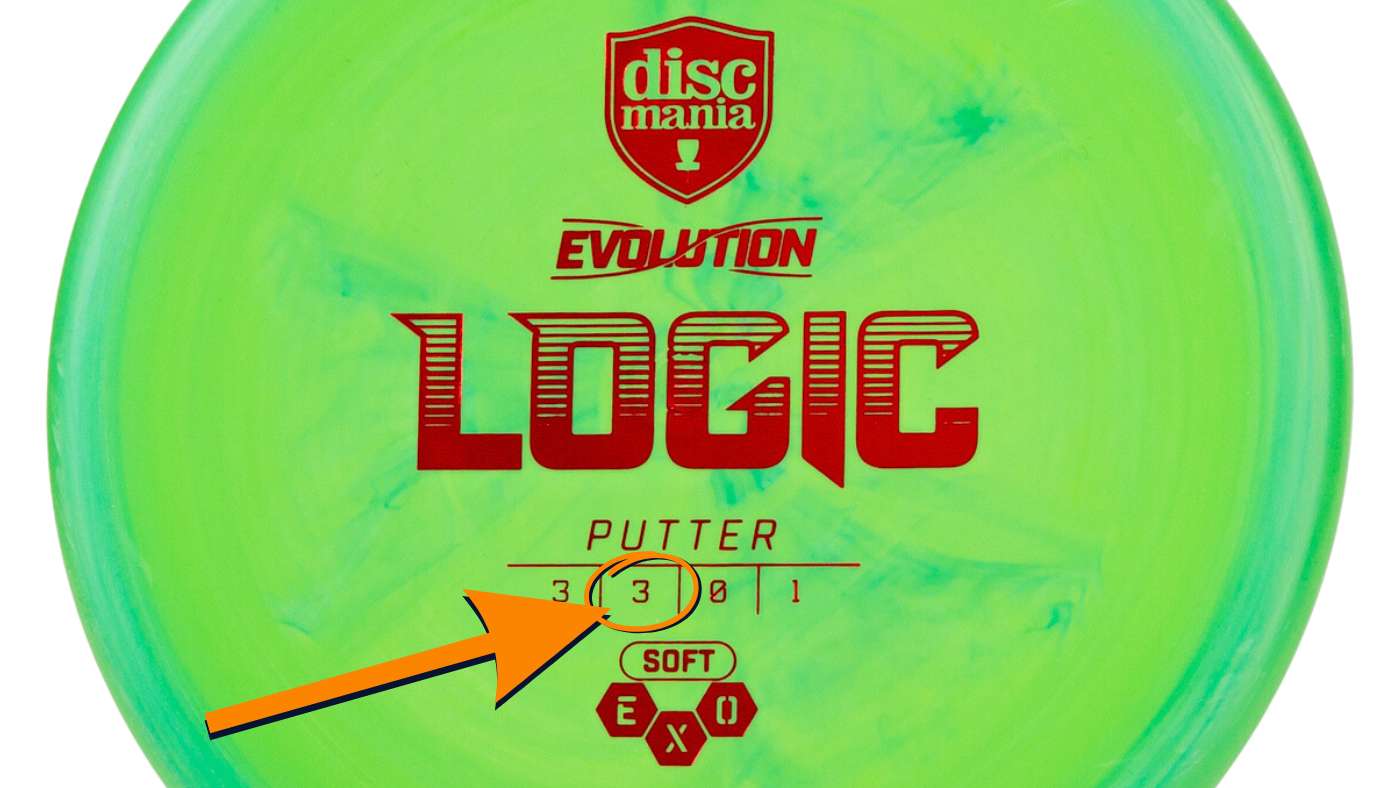
If you are looking to get down n’ dirty to understand how disc golf glide works, you’re in the right place.
You are about to learn what glide is, how it affects disc flight, and when to choose a high or low-glide disc.
This is the second of four articles in my ratings series, if you missed the first one on disc golf speed ratings, you may want to check it out to give more context to this article (but it’s not necessary).
So, just like my grandma used to say: “Let’s put on our fun hats and get this party started!”
What is Glide and How Does It Affect Disc Flight?
According to Dave Dunipace, the OG of disc golf, glide describes the disc’s ability to maintain loft during flight. He also describes glide as the amount of lift a disc has, usually compared to other discs in the same speed category.
To explain the concept of lift: While the disc is in flight, the weight of the disc is pulling it down. The opposing lift force is what’s keeping the disc in flight. The amount of lift generated by the disc is where it gets its glide rating.
If your brain is as small as mine, you may be confused at this point.
But fear not – this video by Bart Bird explains it way better than I can:
The Role of Lift in Disc Flight
Lift plays a crucial role in disc golf flight. It is responsible for keeping the disc in the air and counteracting the downward force of gravity. When a disc has a higher glide rating, it has a greater ability to maintain lift during flight, which can lead to longer throws (but not always).
Let me explain.
Too much lift can actually hurt your throw. When this happens, it will fly too high, slow down too quickly, and change fade hard. This is similar to when a beginner is learning how to throw and angles the disc too high. The disc fades way too fast, and they can’t figure out why the disc won’t fly straight.
Read Next: Overstable vs Understable: Disc Golf Turn Rating
Don’t act like you don’t remember doing this when you were first starting out.. 😉
Understanding Glide Ratings
To understand how your favorite disc’s glide rating fits into the big picture, you’ll need to understand the lift coefficient. Essentially, the total lift of the disc is the air density times the airspeed times the glide rating.
Or: lift = air density x airspeed x glide rating
So anytime one of these factors is increased you’ll have more lift, and when one of these factors is decreased, you will have less lift.
The Importance of Air Density and Airspeed
Air density and airspeed play significant roles in determining the amount of lift a disc generates. In general, higher air density and airspeed lead to more lift, while lower air density and airspeed result in less lift.
Understanding how these factors interact with the glide rating can help you choose the right disc for various playing conditions. For example, playing at high altitudes or in high heat will result in lower air density, requiring a disc with a higher glide rating to compensate for the reduced lift.
So, let’s get to the root of the question.
When to Choose High Glide
Here are the main four reasons you should choose a disc with a high glide rating.
1. Extra Distance: Players who throw with low velocity (have slow arm speed) will need extra glide to give them more distance. While all players will benefit from good glide on their drives, high-power players should use caution with maximum glide discs, as their extremely high release velocity combined with maximum glide could generate too much lift.
This could lead to unpredictable disc flight and reduced accuracy, which is why you see so many professional players using drivers with lower glide ratings when they need extra accuracy.
2. Tailwind: High glide discs are beneficial in tailwind conditions, as tailwinds decrease the amount of lift your disc generates. You’ll need to increase your glide to compensate.
Conversely, you’ll want to decrease the amount of glide you’re using in headwind conditions, as headwinds can cause discs with high glide ratings to generate too much lift and become unstable and less accurate.
3. Low Air Density: High glide is useful when air density is low, such as at high altitudes or in extreme heat. Thin air produces less lift, so high glide discs will help compensate for the reduced aerodynamic effect. Players who frequently play in these conditions may want to consider adding some high glide discs to their bag.
4. Heavy Plastic: Using a lightweight version of a disc increases its glide, while using a heavier one decreases its glide. So, high glide discs can be beneficial when using heavier plastic, as the increased weight can counteract the disc’s lift. This can lead to a more stable and predictable flight path.
Disc Golf Glide – TL;DR
If your brain is swimming from all of this information, you are not alone. Here is the TL;DR of what we’ve learned about glide:
- High glide discs for distance (caution for high-power players)
- Use glide with tailwind, avoid headwind
- Effective in thin air (altitude/heat)
- Light discs are more glide-sensitive
- Balance glide & disc weigh for best performance
Hopefully you have learned something from my article and you aren’t more confused than before you read this. If you have any questions feel free to reach out via the contact page and I’ll be happy to answer any questions.
This is the second article in this series, so make sure to check out the rest of them for a complete understanding of disc golf ratings!